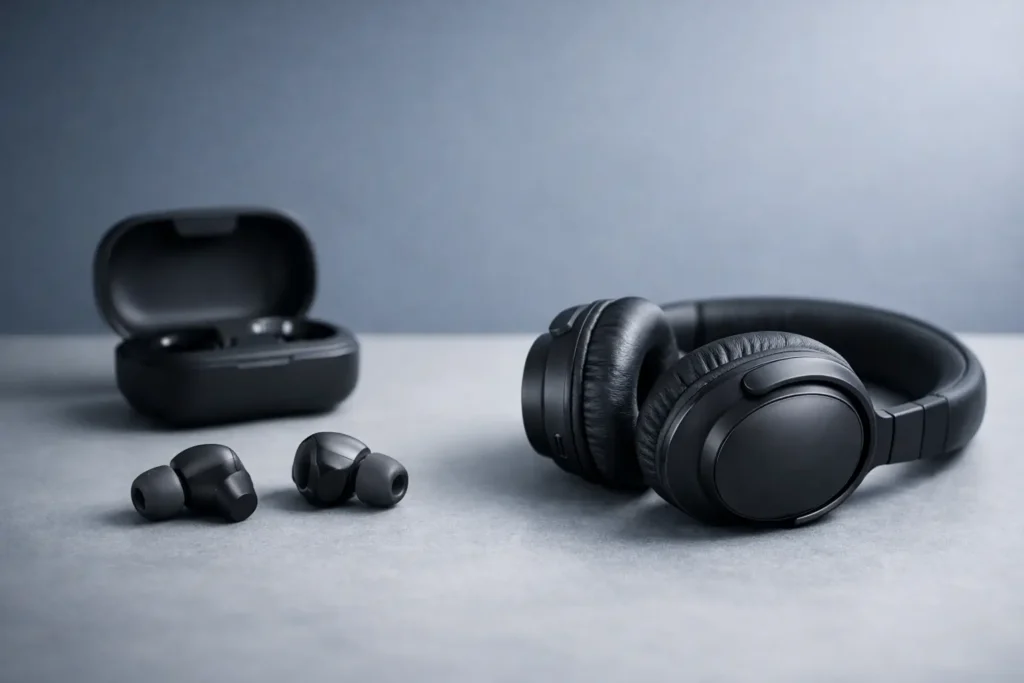
A pair of headphones can change the texture of a daily commute, a late-night playlist, or an important call. The practical question behind in-ear versus over-ear headphones is not which style is objectively better. It is which one suits the places you listen, the way you move, and the level of focus you want from your audio.
For many buyers, sound quality starts the conversation. Comfort, portability, microphone performance, battery habits, and fit usually decide it. A well-chosen pair should feel considered from the first use, not impressive only on a product page.
In-Ear Versus Over-Ear Headphones: The Core Difference
In-ear headphones sit in or at the entrance of the ear canal. They are compact, light, and usually stored in a pocket-sized charging case. Most current wireless models use silicone ear tips in several sizes to create a seal. That seal matters as much as the driver inside: it shapes bass response, reduces outside noise, and keeps the headphones stable while walking.
Over-ear headphones use padded ear cups that surround the ears, connected by a headband. Their larger physical design allows for bigger drivers, more battery capacity, and more space between the sound source and the ear. They are made for longer listening sessions, desk work, flights, and moments when music deserves your full attention.
Neither design is automatically premium simply because of its size. A thoughtfully tuned in-ear pair can be remarkably detailed, while an over-ear model with a poor fit can lose bass and let in more outside sound than expected. The category sets the experience. Materials, tuning, fit, and active noise cancellation determine the result.
Sound: Scale Versus Directness
Over-ear headphones often create the more spacious presentation. Because their drivers sit farther from the ear and their ear cups have more internal volume, instruments can feel spread across a wider stage. This can make live recordings, orchestral work, jazz, and cinematic scores feel more dimensional. The physical weight of a kick drum or low bass line also tends to arrive with less strain.
In-ear headphones place sound much closer to the ear canal. The effect can be immediate and energetic, with clear vocals and strong bass from a small form. A secure seal is essential. If one ear tip is too small, low frequencies can disappear and the sound can seem thin or uneven. Trying each included tip size is not a minor setup task. It is part of getting the intended sound.
For casual listening, both formats can be satisfying. Over-ear headphones generally make complex music easier to follow for extended sessions. In-ear headphones excel when you want good sound without carrying a larger object through the day. If your library shifts from podcasts to Arabic pop to electronic music, focus on balanced tuning and a fit you can wear without adjustment.
Noise Cancellation Is Not the Same as Isolation
Passive isolation comes from physical design. In-ear headphones block sound when their tips seal the ear canal. Over-ear models do it through padded cups that close around the ears. Active noise cancellation uses microphones and processing to reduce steady external sounds, such as aircraft cabin noise, air conditioning, and the low hum of a metro carriage.
Over-ear headphones typically have an advantage in the most demanding noisy settings because they combine larger ear cups with strong active cancellation. Still, a good in-ear model can be highly effective on a commute, especially when the ear tips fit correctly. Voices, sudden announcements, and higher-pitched sounds may remain audible in either format.
A transparency or ambient mode is useful when crossing streets, waiting for an announcement, or briefly speaking to someone. Its quality varies. Look for a natural sound that does not make nearby voices seem sharp or artificial.
Comfort Depends on Your Listening Pattern
The comfort question is personal, but the trade-off is clear. In-ear headphones are lighter and often disappear once fitted properly. They do not press against the head, interfere with glasses, or retain as much heat. In warm weather, that makes a difference during outdoor walks and commutes.
Their limitation is ear-canal fatigue. Even a light pair may become noticeable after a few hours, particularly with firmer foam tips or a deep fit. Some listeners also find that in-ear headphones amplify the sound of footsteps, chewing, or clothing movement. This is known as occlusion, and it can be distracting for walking or running.
Over-ear headphones avoid pressure inside the ear, but introduce pressure around it. Clamp force, ear cup depth, padding material, and headband design all matter. A pair can sound excellent yet become tiring if it presses on the jaw, touches the outer ear, or traps heat. Those who wear glasses should pay particular attention: the arms of the frames can break the ear-pad seal and create pressure points.
For focused work, over-ear headphones are usually the easier long-session choice. For movement and short listening windows, in-ear headphones often feel more natural. A person who listens for four hours at a desk may make a different choice from someone who uses headphones in 20-minute intervals between meetings.
Portability and Daily Use
In-ear headphones win on space. Their case fits easily in a pocket, a small crossbody bag, or the narrow compartment of a work tote. They are simple to carry as a default item, which means they are more likely to be with you when you need them.
Over-ear headphones require a case or a dedicated place in a bag. Foldable designs help, but they are still a larger commitment. In return, they often offer longer single-charge listening, physical controls that are easier to find, and less dependence on a tiny charging case. For long-haul travel, that balance can favor over-ear models.
Think beyond the commute. In-ear headphones are easier to keep on hand for calls, errands, and short flights. Over-ear headphones are better suited to a planned listening session, a workday at home, or a journey where a larger carry-on bag is already part of the plan.
Calls, Workouts, and Everyday Friction
Microphone quality should be assessed separately from audio quality. In-ear headphones position their microphones near the mouth, but they are exposed to wind. Over-ear models have more room for microphone arrays and noise processing, though results still differ by model. For regular calls from cafés, streets, or shared spaces, clear voice pickup and effective wind reduction deserve as much attention as music performance.
For exercise, in-ear headphones are usually the practical option. They are lighter, less likely to shift during movement, and less insulating around the head. A secure fit is more valuable than maximum bass. If you train outside, an ambient mode can help you stay aware of traffic and people nearby.
Over-ear headphones can work for low-impact training or indoor strength sessions, but sweat, heat, and movement are less forgiving to padded ear cups. Check whether the design is intended for that use rather than assuming any wireless pair belongs in a gym bag.
There is also the small matter of social ease. Removing one in-ear headphone for a brief exchange is quick, though it can be easy to misplace. Sliding one ear cup off is equally simple and tends to feel more deliberate in an office or shared living space. These details sound minor until they become part of every day.
How to Choose the Right Style
Start with the environment where you listen most. If you spend much of the week moving through a city, carrying minimal gear, taking calls between appointments, or exercising, in-ear headphones are likely the more useful format. Choose a model with several ear-tip sizes, dependable controls, and a case you will actually carry.
If you work with music in the background for long stretches, travel frequently, or want to hear more space and depth in recordings, over-ear headphones are worth the extra room in your bag. Prioritize comfort before feature lists. Ear pad depth and headband pressure will affect your satisfaction more than a small difference in stated battery life.
Some listeners benefit from owning both. In-ear headphones handle the unscheduled parts of the day. Over-ear headphones create a more settled listening space when time allows. That is not excess for everyone, but it can be a sensible division between mobility and immersion.
The best choice is the one that removes friction from your real routine. Try the fit carefully, consider where the headphones will live when not in use, and choose the style you will reach for without hesitation when the next song, call, or quiet moment arrives.
