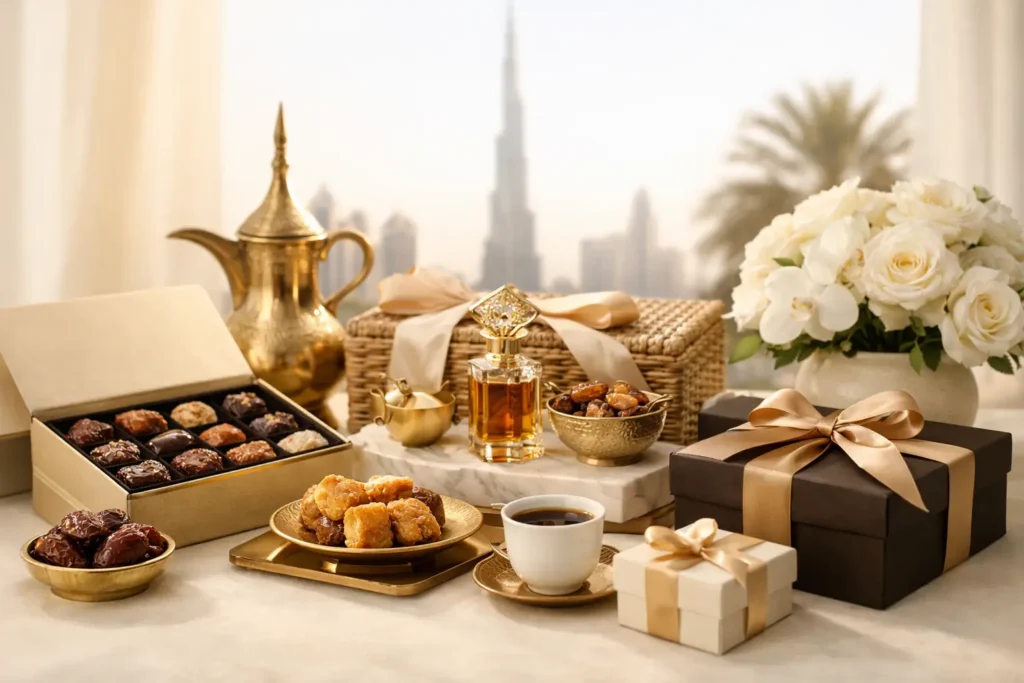
A good gourmet gift should feel chosen, not merely purchased. This UAE gourmet gifting guide focuses on the details that make a food gift land well: the recipient’s taste, the occasion, the format, and the moment it arrives.
Gourmet gifting in the UAE has a particular rhythm. A host gift may be shared after dinner. An Eid gesture may be placed beside coffee. A corporate thank-you may need to feel polished without becoming overly personal. The best choice respects that context while giving the recipient something they will genuinely enjoy.
What makes a gourmet gift feel considered?
A considered gourmet gift has a clear point of view. It might introduce a specific ingredient, use a distinctive preparation, or present a familiar food in a more refined form.
The value is not only in the price or packaging. It comes from the degree of attention behind the choice. A box of dates, for example, becomes more memorable when the variety, filling, and chocolate origin are clear. Specificity gives the recipient a story to discover, even if the gift is enjoyed in a few quiet minutes with Arabic coffee.
Choose products with a short, readable composition and a recognizable purpose. This is especially useful when buying for someone whose dietary preferences are not fully known. A gift with one central idea is easier to understand and easier to share.
Presentation matters, but it should support the food rather than distract from it. Clean packaging, a proportionate box, and a note with a simple message will usually feel more appropriate than elaborate decoration. For professional recipients, restraint often reads as more thoughtful.
Which gourmet gift fits the occasion?
The occasion should guide the scale and style of the gift. A small personal gesture and a family celebration can both call for specialty food, but they do not call for the same format.
For hosts and dinner invitations
Bring something that can be served or enjoyed after guests leave. Chocolate, dates, nuts, and coffee-friendly sweets are reliable because they suit both formal and relaxed gatherings. Avoid gifts that require immediate preparation unless you know the host well.
A compact, shareable box is usually the right choice. It communicates appreciation without taking over the table or creating pressure to open it during the event. If the dinner is at a home where several generations are present, familiar regional ingredients presented with care are often a stronger choice than novelty alone.
For Eid, Ramadan, and family visits
Dates carry natural meaning during Ramadan and remain appropriate across many family occasions. For gifting, look beyond quantity. The detail of the date, the filling, and the chocolate can turn a classic gesture into something more distinctive.
Tâmara’s handmade chocolate-coated Medjool dates follow a focused format: each pitted date is filled with a single roasted nut and enrobed in single-origin chocolate, available in 70% dark or 38% milk chocolate. It is an example of a gift that feels familiar in context while offering a clear upgrade in craft and presentation.
For larger family visits, consider whether one substantial box is more useful than several small items. A shareable format often works best when the gift will sit in a living room, majlis, or dining area and be offered to guests throughout the evening.
For birthdays and personal milestones
Personal gifts can be more expressive. Start with what the recipient reaches for in daily life: dark chocolate, milk chocolate, dates, roasted nuts, specialty coffee, or savory snacks. A gift does not need to be unusual to feel personal. It needs to reflect an observed preference.
If you are unsure, choose balance over intensity. Dark chocolate can be a strong choice for someone who enjoys less sweetness, while milk chocolate is often more broadly familiar. When the recipient is a couple or a household, a varied but coherent selection is safer than a highly niche item.
For clients, colleagues, and teams
Corporate gourmet gifts should be easy to receive, simple to share, and appropriate across different working relationships. Specialty dates and chocolate work well because they feel premium without being overly intimate.
Keep branding light unless the occasion specifically calls for it. The gift itself should remain the focus. A brief card with the recipient’s name and a direct message is usually enough: thank you for your partnership, congratulations on the milestone, or warm wishes for the season.
For a team, individual portions may be more practical than one large gift. For a senior client or host, one refined presentation can feel more appropriate. The right answer depends on whether the gift is meant for a person, a household, or an office.
How do you choose between familiar and unexpected food gifts?
Choose familiar flavors when the relationship is formal or the recipient’s preferences are unknown. Choose a more unexpected interpretation when you know the recipient appreciates discovery.
A familiar food with a refined detail is often the best middle ground. Medjool dates with a roasted nut center and single-origin chocolate offer recognition first, then surprise. That structure makes the gift approachable while still giving it a point of difference.
Novelty has a trade-off. Highly unusual flavors can be memorable, but they can also remain unopened if the recipient is uncertain how or when to enjoy them. For business gifts and larger gatherings, recognizability is usually more valuable than experimentation. For close friends, a more specific choice can show that you know their taste.
How much should you spend on a gourmet gift?
Spend according to the relationship and the setting, not an assumed rule. A modest but well-chosen food gift can feel more generous than a larger assortment with no clear identity.
For a casual invitation, choose something polished and shareable. For a close family occasion, prioritize enough quantity for the household. For a client or milestone, invest in quality, presentation, and a message that is appropriately measured.
Avoid treating gourmet gifting as a contest of size. The recipient notices whether the selection makes sense for them. A concise gift that fits the moment will feel more confident than an oversized hamper assembled from unrelated products.
What should you check before sending a food gift?
Confirm the recipient’s location, availability, and any dietary considerations before placing the order. This is particularly useful for workplace gifts, apartment deliveries, and recipients who travel frequently.
Timing deserves equal attention. A gourmet gift is best received when it can be enjoyed soon after arrival, rather than left at an office over a weekend or sent while the recipient is away. If the gift is for a gathering, allow enough time for it to arrive before the host begins preparing.
For delivery within the UAE and the GCC, Toko’s standard delivery is 2 to 3 days at AED 25, with free delivery above AED 250. International shipping is also available. When the occasion has a fixed date, ordering with room for that delivery window is the more considered choice.
If you are sending directly to the recipient, include a clear name, phone number, and delivery details. A short gift message prevents the package from feeling anonymous. It does not need to be elaborate. A sincere line is enough.
How should a gourmet gift be presented?
The presentation should make the recipient want to open the gift, not make them worry about preserving it. Choose a format that looks complete on its own, then add only what helps clarify the occasion.
A handwritten card can be appropriate for personal gifts, while a printed note may suit business sending. Keep the language specific. Instead of a general seasonal phrase, refer to the reason for the gift: appreciation after a project, congratulations on a new home, or thanks for hosting.
When delivering multiple gifts, consistency matters. Use the same quality level and message structure across the group, while reserving personalization for names or individual notes. This protects the gesture from feeling uneven.
The most successful gourmet gifts do not ask for attention. They create a small, well-timed pleasure: something beautiful to open, easy to offer, and worth remembering after the last piece is gone.
