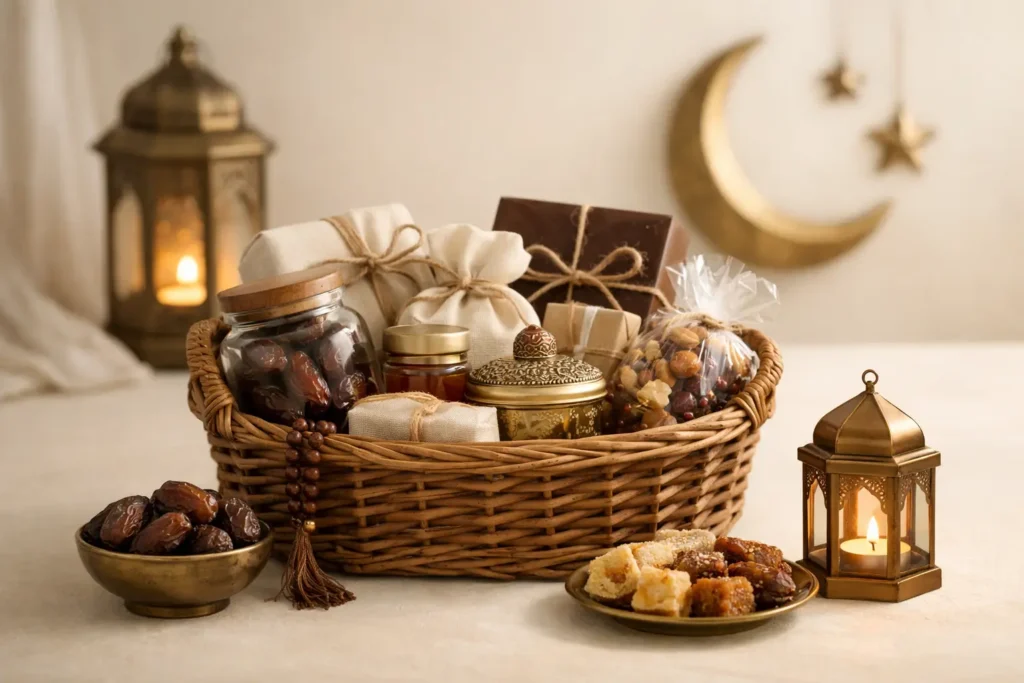
A Ramadan hamper should feel considered before it is opened. The best ones are not crowded with random treats or built around a single grand gesture. They bring together food, ritual, and a small sense of occasion. If you are considering how to build a Ramadan hamper, begin with the person receiving it and the moments they will share during the month.
A thoughtful hamper can mark the first iftar in a new home, thank a colleague, or arrive at a family gathering with something more personal than a standard box of sweets. The details matter: quality dates, a flavor that feels familiar, and packaging that is useful rather than excessive.
Start With the Occasion and Recipient
Before choosing products, decide what the hamper is meant to say. A gift for close family can be abundant and personal. A hamper for a host should be easy to put on the table. For a client or colleague, restraint is usually more appropriate: a small collection of well-made items has more presence than an oversized assortment.
Consider how many people may enjoy it. A couple may appreciate a refined selection of dates, chocolate, and tea. A larger household benefits from shareable pantry items and a generous centerpiece. If the recipient has known dietary preferences, build around them rather than treating them as an afterthought. The gesture should make their Ramadan easier and more enjoyable.
The time of day also shapes the selection. Some gifts are designed for iftar, while others suit late-evening coffee or a quiet suhoor. A hamper does not need to cover every meal. It simply needs a clear purpose.
Choose One Ingredient as the Centerpiece
Every memorable hamper has an anchor. For Ramadan, dates are the natural place to start. They hold cultural significance at the moment of breaking the fast, travel well, and can be presented with genuine range, from simply prepared Medjool dates to dates filled with nuts or enrobed in Belgian chocolate.
Choose the centerpiece first, then select companions that make sense beside it. Rich chocolate dates pair well with a clean, aromatic tea. Plain Medjool dates may sit beautifully beside tahini, nuts, or a fine coffee. The aim is contrast, not repetition. If every item is sweet, the hamper can feel one-dimensional before anyone reaches the second layer.
For a polished arrangement, consider these five roles:
- Dates or another meaningful sweet as the focal point
- A drink element, such as coffee, tea, or a Ramadan-inspired blend
- A savory item that balances richer flavors
- A pantry item with a long shelf life and a clear use at the table
- A small non-food detail, if it adds lasting value
Not every hamper needs all five. A compact gift with three excellent pieces can feel more generous than a large box filled with items that lack a reason to be there.
Build Flavor Around the Iftar Table
Ramadan hampers often lean sweet, and that makes sense. Yet the most useful gifts make room for balance. Think in terms of the table rather than individual products: what can be served immediately, what can be saved for later, and what might become part of a family routine?
Dates, dried fruit, and chocolate bring depth and sweetness. Roasted nuts, crackers, or savory bites prevent the collection from becoming too rich. A quality spread, honey, or preserve can carry into breakfast and suhoor. Tea and coffee invite the hamper to remain on the table after the meal is over.
There is also a practical trade-off between novelty and familiarity. An unusual flavor can make a gift feel distinctive, but familiar products are more likely to be shared and enjoyed without hesitation. When gifting outside your closest circle, let one item be unexpected and keep the rest accessible.
Avoid including products that require immediate refrigeration unless you know the gift will be received and stored promptly. Shelf-stable food is generally the more considerate choice, particularly when sending a hamper to a workplace or a busy household.
Add a Detail Beyond Food, Carefully
A non-food piece can give a Ramadan hamper a longer life, but it should earn its place. A beautiful serving spoon, a small tray, elegant napkins, or a simple lantern-style accent can work well when it supports the ritual of gathering. It should not turn the hamper into a collection of unrelated objects.
For people who appreciate technology, a carefully chosen accessory may be appropriate, such as a compact speaker for gatherings or a useful charging accessory for travel between family visits. This depends heavily on the relationship. Food is universal. Technology is more personal, so choose it only when you understand the recipient’s habits and taste.
A handwritten card remains one of the strongest additions. Keep the note brief and sincere. A message wishing the recipient a peaceful Ramadan is enough. The card should feel like part of the gift, not an inserted formality.
How to Build a Ramadan Hamper That Looks Intentional
Presentation is not about excess ribbon or elaborate layers. It is about order. Use a basket, lidded box, or reusable tray that suits the number and weight of the items. A shallow box works for a concise edit. A basket is better for taller pantry products and sharing pieces.
Place the heaviest items at the base and the visual centerpiece slightly forward. Use tissue, fabric, or paper filler only to keep products steady and create a clean frame. The recipient should be able to see what is inside without needing to unpack the entire hamper first.
Keep the palette calm. Natural fibers, deep green, warm gold, cream, and dark chocolate tones feel appropriate without relying on obvious seasonal decoration. If you add a Ramadan greeting tag, let it be the only overtly festive element. Good packaging gives the products room to speak.
Reusable packaging adds value when it is genuinely useful. A sturdy storage box, serving tray, or woven basket can remain in the home after the food has been enjoyed. A fragile decorative container may look appealing, but it creates a different kind of burden if it has no practical purpose.
Match the Size to the Relationship
There is no universal “right” Ramadan hamper. Its scale should reflect the relationship and setting. For a neighbor, a small box of premium dates with tea can be warm and appropriate. For a host preparing iftar for several people, add savory elements and enough sweets to share. For an office team, individual portions or a table-ready selection may be more useful than one luxury item intended for a single person.
For corporate gifting, clarity matters most. Keep the collection inclusive, easy to share, and free from overly personal choices. Avoid products with unfamiliar preparation instructions or strong niche flavors unless they are clearly labeled. A composed food gift shows attention without asking too much of the recipient.
If you are creating several hampers, use one consistent foundation and vary only the centerpiece or note. This keeps the experience cohesive while allowing each gift to retain a sense of individual care.
A Simple Formula for a Thoughtful Gift
A reliable Ramadan hamper has one focal food, one complementary drink or pantry item, one balancing flavor, and one personal touch. That formula works because it respects the recipient’s time. Nothing feels unnecessary, and each item has a role at iftar, after dinner, or in the days that follow.
Artisanal gifting is often strongest when it is edited. A box of carefully selected chocolate-enrobed Medjool dates, paired with a complementary tea and a handwritten message, can say more than a large, generic assortment. Collections from Tâmara are a useful example of this approach: familiar Ramadan ingredients presented with attention to craft and occasion.
Build the hamper around what will be opened, shared, and remembered. When each piece belongs, the gift feels less like a bundle of products and more like an invitation to pause together.
