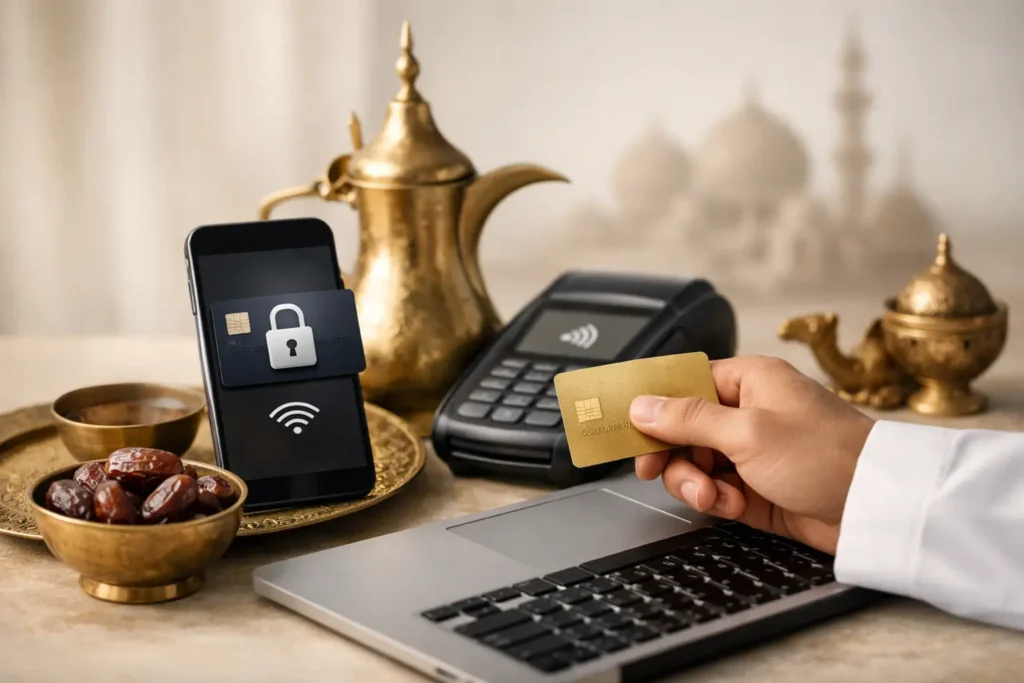
A payment page can look polished and still leave basic questions unanswered. Secure online payment methods UAE shoppers choose should give them clear control over the transaction, a recognizable seller, and a record they can refer to later.
For most online orders, the safest choice is not a single payment method. It is a method matched to the order, combined with a few careful checks before payment details are entered. That matters whether you are ordering a food gift, replacing a daily-carry accessory, or purchasing a higher-value technology item.
What makes an online payment method secure?
A secure online payment method protects both the payment itself and the shopper’s ability to identify, monitor, and question a transaction. The method should add verification, while the store should make its identity, pricing, and terms easy to understand.
Security is therefore more than the lock icon in a browser. A secure checkout asks for details only where they are needed, confirms the order clearly, and gives the buyer a transaction record. The buyer should also be able to see the merchant name, the total charge, the currency, and the delivery details before placing an order.
There is a practical distinction between payment security and shopping confidence. A card or wallet can protect credentials, but it cannot make an unclear seller more accountable. Review both parts of the purchase.
Which secure online payment methods work best in the UAE?
Credit cards, debit cards, and digital wallets can all be appropriate for online purchases in the UAE. The best option depends on the value of the order, the controls offered by your bank or wallet provider, and whether you want the payment to be charged directly to a card account.
Credit cards for larger or considered purchases
A credit card is often a sensible choice for a higher-value order because it separates the purchase from the funds held in your current account. Many issuers also provide transaction alerts, temporary card controls, and a process for raising questions about unfamiliar charges.
Before using a credit card, check that online transactions are enabled and that your contact details with the issuer are current. Verification requests may be sent to a registered phone number or banking app. If that step fails, do not repeatedly submit the order. Confirm the issue with your bank first.
Credit cards are not automatically safer because they are credit cards. A saved card on an old device, a weak account password, or an ignored payment notification can remove much of that advantage.
Debit cards when account controls are active
Debit cards are convenient for everyday purchases and make spending easier to track against available funds. The trade-off is direct access to the account balance. Use a debit card when you are comfortable with the merchant and have enabled notifications and account security controls through your bank.
For a first order from a retailer, it is reasonable to start with a modest purchase if the product allows it. This is not a rule for every store. It is simply a measured way to assess the order confirmation, delivery communication, and statement descriptor before making a larger purchase later.
Digital wallets for fewer exposed details
A digital wallet can reduce the number of times a merchant receives your card details directly. It may also require device authentication, such as a passcode or biometric confirmation, before payment is approved.
The convenience is useful, but the wallet account needs the same care as a banking app. Use a unique password, turn on available account verification, and remove cards you no longer use. Do not approve a wallet prompt unless you initiated the purchase yourself.
Bank transfers only when the seller is clear
Bank transfers can be suitable when a seller provides clear legal and contact details and the payment instructions match those details. They are less flexible than card payments because an incorrect transfer can be difficult to reverse once sent.
Treat a changed bank account request with particular care, especially if it arrives by email, text message, or direct message after an order is placed. Verify the request through the seller’s published contact channel, not by replying to the message that made the request.
How do you check a checkout before paying?
Check the seller, the total, and the connection before you pay. These three checks take less than a minute and prevent many avoidable mistakes.
Start with the web address. It should match the retailer you intended to visit, with no extra words, misspellings, or unfamiliar domain ending. A secure connection indicator is useful, but it only confirms that the connection is encrypted. It does not confirm that the business behind the page is legitimate.
Then review the checkout details. The product name, quantity, delivery charge, taxes or other stated fees, and final total should be visible before payment. If prices are presented in AED, make sure the amount shown at checkout matches what you expect to pay. A clear order confirmation should follow payment.
Finally, look for information that identifies the business. A legitimate retailer should make its contact route, service terms, and order process understandable without requiring a customer to search through social media comments. For UAE shoppers, a stated business identity and local operating details provide useful context alongside the payment method.
What should you never enter at checkout?
A normal online checkout may ask for card details and a verification code sent by your bank. It should not ask for your banking app password, ATM PIN, full online banking credentials, or a code you did not request.
Be cautious with unexpected calls and messages that claim a payment has failed or a delivery is waiting. Scammers often create pressure by referring to a small fee, a missed package, or an account restriction. Open the retailer’s site or your bank’s app directly instead of using the message link.
The same rule applies after payment. A real order update may contain useful information, but it should not require you to provide card credentials again just to confirm delivery.
How can you protect your card after an online purchase?
Turn on transaction notifications and read them when they arrive. A quick alert is often the fastest way to spot a duplicate charge, an incorrect amount, or a transaction you do not recognize.
Keep the order confirmation until the item has arrived and you have checked the final statement entry. Save the order number, merchant name, payment date, and amount. These details make any conversation with the retailer or bank more precise.
Avoid storing card details on every site you use. Saved payment information is convenient for stores you return to and trust, but it creates another account that must be protected. If you save a card, use a unique password for that shopping account and enable available two-step verification.
Public Wi-Fi deserves extra caution. If you need to place an order while traveling or working outside the home, use a personal mobile connection where possible. At minimum, avoid entering payment details on a shared computer or a network you do not recognize.
What should you do if a payment looks wrong?
Act promptly and keep the facts together. First, check the order confirmation and your account statement to confirm the merchant name, amount, and date. Some statement descriptors differ from the retail name, so verify before assuming a charge is unauthorized.
If the issue relates to an order you placed, contact the retailer through its published support channel with the order number and payment details. If you do not recognize the transaction, use your bank or card issuer’s official contact route immediately and follow its instructions. Do not share verification codes with anyone who calls unexpectedly.
For purchases across the UAE and GCC, retain any delivery confirmation and communication connected to the order. A complete record is more useful than screenshots taken after a problem has become confusing.
The right payment method should feel quiet rather than complicated. Choose the option you understand, confirm the seller and total before approval, and keep the record of what you bought. Those habits make room for the part of online shopping that should matter most: choosing something worth receiving.
