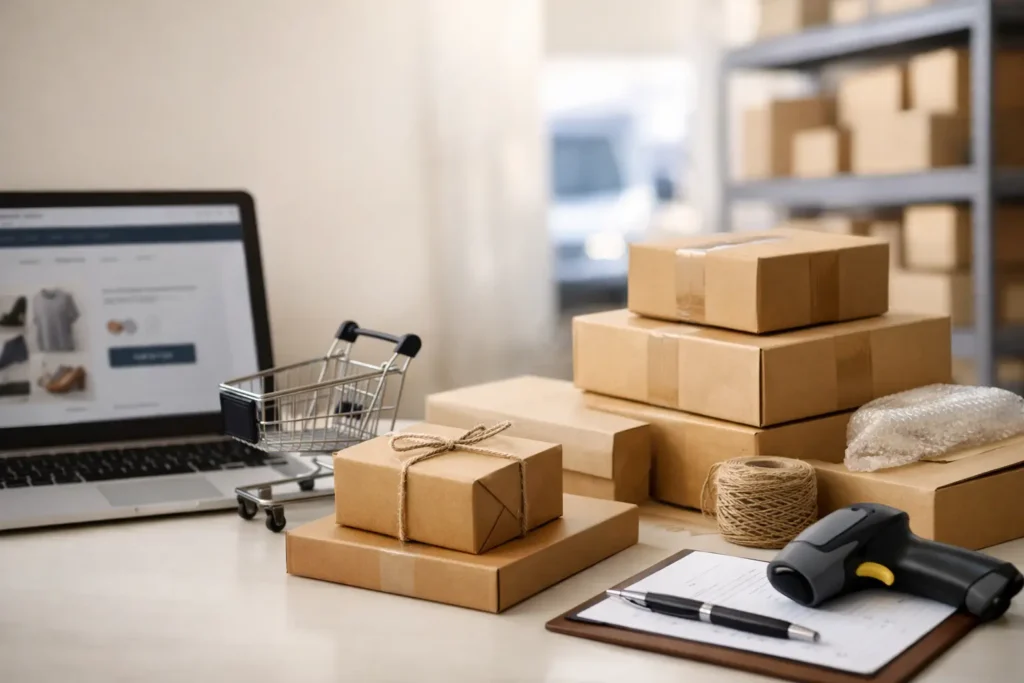
A product can sit inside a beautifully curated online store without ever having passed through that store’s own warehouse. It sounds like a small detail. In practice it decides who prepares your order, where the product information comes from, and which company stands behind the item once you have paid. For anyone in the UAE who is used to comparing the same product across several regional retailers, that is a distinction worth understanding before you reach the checkout.
So what are retailer fulfilled products? They are products presented through one storefront or recommendation platform but packed, dispatched, and delivered by the retailer that actually holds the stock. The storefront introduces the product, places it within a collection, and makes it easier to find. The fulfilling retailer handles the physical side of the order. Two businesses, two roles, one purchase.
Done well, this model brings together thoughtful curation and established retail operations. Done honestly, it also comes with clear disclosure. A good product page should make it easy to see who is selling the item and who will fulfill it, so nothing about the order is a surprise after you buy.
What Are Retailer Fulfilled Products?
A retailer fulfilled product is one that is fulfilled by the retailer rather than by the website where you first discovered it. “Fulfilled” is simply the practical work that happens once you place an order: checking that the item is in stock, picking it, packing it, handing it to a delivery network, and managing the order inside the retailer’s own systems.
This can appear in a few ways online. A multi-store destination might sell its own products from a dedicated store while also featuring selected items from retail partners. In that second case, the partner retailer keeps the inventory and fulfills the purchase directly. The item is still shown inside a considered shopping experience, but it does not travel through the destination’s own stockroom.
The phrase earns its place because it separates two things that often get blurred: product discovery and product fulfillment. They are related, but they are not always done by the same business. This is not a lesser form of eCommerce. It is a different operating model, and frequently a sensible one, because the retailer fulfilling the order usually has direct access to the product, its specifications, its live stock, and its dispatch process. That closeness matters most with consumer technology, where the exact model, regional version, colour, storage option, and bundled accessories all need to be handled accurately.
The Roles Behind a Single Listing
One listing can involve more than one company, and understanding each role makes the whole journey easier to read.
The storefront is where you discover the product. It selects items for a particular audience, writes or adapts the descriptions, arranges collections, and builds a more focused way to browse than a vast general catalogue. Its value is editorial as much as commercial. It helps you find things that fit a purpose, whether that is a genuinely useful travel accessory, a considered gift, or a piece of everyday tech.
The retailer is the business that sells the item and holds, or can access, the stock. When a product is retailer fulfilled, this is also the company responsible for the physical order. The warehouse, the packaging standards, the inventory system, and the dispatch workflow all sit on the retailer’s side.
A platform may sit between those two roles. It can provide recommendations, a shared shopping environment, or a route to the partner retailer’s listing, and depending on the arrangement it may earn a commission when a purchase is made. That commercial relationship should be stated plainly, because it explains how a recommendation is funded without changing what the product actually is.
A delivery provider, finally, carries the parcel, but it is not necessarily the seller or the fulfiller. Shipping a box and fulfilling an order are connected tasks, not the same one. Fulfillment begins well before the parcel ever reaches a courier.
Why Retailer Fulfillment Can Be a Good Fit
For shoppers, this model can combine two things that are usually kept apart: focused discovery and access to a real retailer’s inventory. Instead of scrolling a huge catalogue full of near-identical results, you can start with a store that has a clear point of view.
That matters whenever a purchase has context. A gourmet gift is not interchangeable with any other food item. Its appeal might lie in where the dates come from, the character of the chocolate, and how the whole thing is presented. A technology purchase can be just as specific. Storage capacity, regional compatibility, finish, warranty coverage, and the accessories in the box can all decide whether it is the right choice.
Retailer fulfillment lets a storefront concentrate on selecting and explaining those details while the retail partner manages the item’s physical journey. It also spares a small, specialist store from having to stock every single variation of every product in its own warehouse. There is a commercial benefit too. Independent stores keep their own identity rather than dissolving into a generic catalogue. A gifting store stays gift-led. A technology store stays product-led. What you meet is a considered point of view, not just another search result.
What Retailer Fulfillment Does Not Automatically Mean
The term is useful, but on its own it does not tell you everything about an order. It does not confirm that every item in your cart comes from the same retailer. It does not mean every product follows the same delivery route. And it does not reveal who sets every commercial condition attached to the purchase.
That is exactly why clear product-level information beats a broad claim. A retailer fulfilled product should identify the relevant retailer where possible and distinguish a direct sale from a recommendation or a partner listing. If an order pulls items from different sources, it is reasonable to expect that the handling may differ from item to item.
It is worth separating fulfillment from curation as well. A curated product is one chosen because it meets a store’s standards or suits its range. A fulfilled product is the item a retailer will pack and dispatch. A product can be both curated and retailer fulfilled, but one label never proves the other. For UAE shoppers who habitually compare items across regional retailers, that difference is practical rather than academic. It explains why an item can be presented in one shopping environment while its stock and fulfillment are managed somewhere else entirely.
How It Compares With Other Models
In a direct retail model, one business presents the product, owns the stock, takes the order, and fulfils it. That is straightforward, because the seller and the fulfiller are the same party.
In a marketplace-fulfilled model, a platform runs storage and dispatch on behalf of third-party sellers. The seller may own the product while the platform handles much of the warehouse work. That creates a different split of responsibilities from retailer fulfillment.
In a retailer fulfilled model, the retailer stays close to the inventory and the order handling. The discovery layer can be separate, but the retailer still fulfils the purchase. That is valuable precisely when the retailer’s stock knowledge and category expertise are part of why the product was selected in the first place.
No single model is automatically best. Direct fulfillment suits a boutique range with limited, carefully controlled stock. Marketplace fulfillment suits high-volume products. Retailer fulfillment can be a strong match for curated partner recommendations, especially when a store wants to widen your choice without pretending that every item sits on its own shelves.
What to Check Before You Buy
A few habits make retailer fulfilled products easy to evaluate. Start with the seller and fulfillment disclosure. Look for language that tells you whether the item is sold and fulfilled by a partner retailer, sold directly by the storefront, or simply recommended through it. Then read the product information with the category in mind. For technology, confirm the model, storage option, colour, compatibility, and everything included. For food and gifting, look at ingredients, origin, presentation, and any handling notes. Retailer fulfillment never removes the need for product-specific detail.
Consider the whole basket too. A shared browsing experience can feel like one destination even when items from different stores or partners travel by different operational paths. The useful question is not whether the experience looks unified. It is whether the role of each business is stated clearly. Finally, notice the difference between a recommendation and a direct sale. A recommendation signals editorial judgement. A direct sale signals that the storefront itself is the merchant for that item. Both can be genuinely useful, as long as the distinction is visible before you pay rather than after.
A More Transparent Way to Shop Across Stores
Retailer fulfillment works best when it is explained without jargon. You should not need a complicated map of warehouse relationships. You need to know what you are buying, who is selling it, and who will handle the order.
For a multi-store destination such as Toko, that clarity supports a more considered way to shop. Each store keeps its own curation and character, whether that is the Tâmara gifting range or the Sultão technology shelf, while Sócio partner recommendations add relevant choice where it genuinely makes sense. The aim is not to make every product look as though it came from one anonymous source. It is to make the path from discovery to fulfillment easy to follow.
When a product page tells that story plainly, retailer fulfilled products stop being confusing and become simple to understand: a carefully chosen item, sold and dispatched by the retailer best placed to handle it. That, more than any single feature or figure, is the mark of a listing you can trust.
