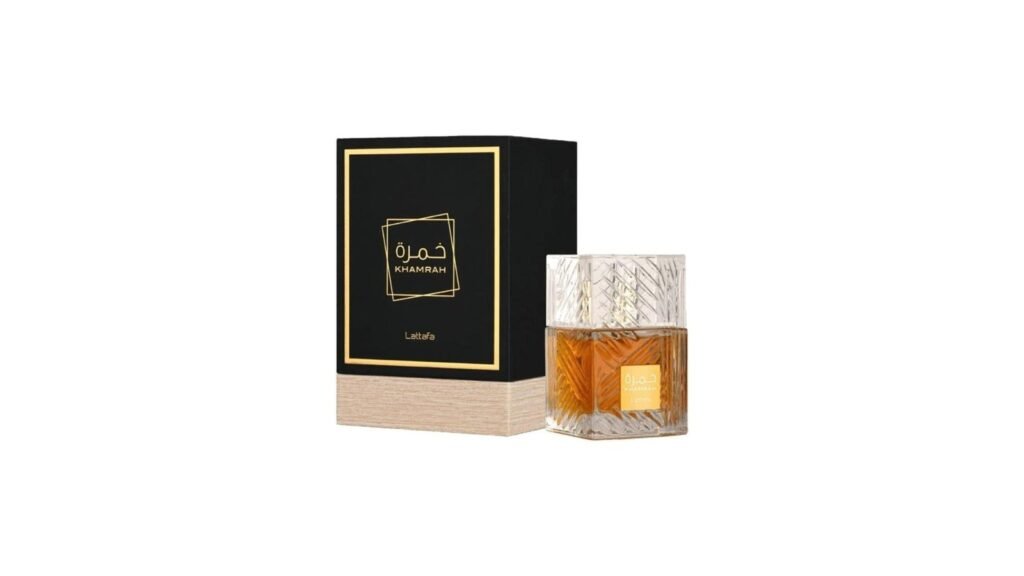
A fragrance doesn’t become a favourite simply because it’s sweet or strong. It needs shape. Lattafa Khamrah has that shape: a rich opening of spice and citrus, a gourmand centre built around dates and praline, and a warm amber-vanilla dry-down that stays close to the skin while still making its presence known.
It’s a scent for people who treat fragrance as part of their personal atmosphere — evening coffee, pressed fabrics, dim restaurants, air-conditioned interiors after sunset. Khamrah is generous, but it isn’t one-dimensional. Its appeal lives in the contrast between edible sweetness, aromatic spice, and resinous warmth. And in a market full of warm gourmands that cost several times as much, that’s the quiet reason it keeps coming up: it delivers a composition that feels considered, not cheap.
Lattafa Khamrah at a glance:
- Scent family — warm, sweet, spicy amber gourmand
- Signature accord — dates and praline, wrapped in cinnamon and vanilla
- Best in — cool weather, evenings, air-conditioned spaces
- Gender — unisex, leaning rich and dessert-like
- Wears like — a statement scent with real presence; a little goes a long way
- Best for — dinners, gatherings, gifting someone who already loves warm fragrances
What Does Lattafa Khamrah Smell Like?
Lattafa Khamrah is generally described as a warm, sweet, spicy amber fragrance. Its structure moves from bright spice into a dense gourmand accord, then settles into vanilla, woods, and resins. The effect is plush rather than fresh.
The opening pushes cinnamon and nutmeg forward first. Bergamot adds a short-lived lift that keeps the first few minutes from feeling too dark or syrupy. On skin, the spice reads warm and dry rather than sharp — closer to the aroma around a dessert table than to a citrus cologne.
As it develops, the date-and-praline character comes into focus. This is the part that gives Khamrah its identity. Dates bring a dark, honeyed fruitiness with a faint caramel edge; praline adds toasted sugar and nutty warmth. Together they create a gourmand profile that feels especially familiar to Gulf wearers, where date, amber, and spice accords already have a natural place in gifting and personal scent wardrobes.
The base is where the sweetness gains depth. Vanilla, tonka bean, benzoin, myrrh, amberwood, and woody notes stop the fragrance short of smelling like a simple confection. Benzoin and myrrh add a balsamic, lightly resinous texture; tonka lends a soft, almond-like creaminess. The final impression is smooth, warm, and slightly smoky in the way amber fragrances can be — though smoke is never the central theme.
Lattafa Khamrah Notes at a Glance
Notes can present differently depending on skin chemistry, temperature, and application. Still, Khamrah is commonly associated with this progression:
- Opening: cinnamon, nutmeg, and bergamot
- Heart: dates, praline, tuberose, and floral-woody accords
- Base: vanilla, tonka bean, amberwood, benzoin, myrrh, and woods
The florals are present but restrained. They don’t turn Khamrah into a floral fragrance — they simply give the dense sweetness a little air and keep the middle from going flat. Most wearers register spice, date, praline, amber, and vanilla long before they notice anything floral.
How It Wears Through the Day
Khamrah changes noticeably after application. The first 15 to 30 minutes are the most animated, with cinnamon and nutmeg forming a warm halo around the wearer. This is also where restraint pays off: a few sprays are usually plenty for close settings, particularly indoors.
Once the opening settles, the fragrance turns rounder and sweeter. The date-praline accord takes centre stage, supported by creamy vanilla and amber. This middle phase is its most comforting — polished with a crisp shirt, knitwear, or evening attire, and still at home with casual clothes when the weather is cool.
In the dry-down, the sharper spice softens and the scent grows more resinous. Vanilla, benzoin, and amberwood linger, often with a faint woody edge. On fabric, this final stage tends to last longer and read sweeter than it does on skin.
Quick tip: If you love the warm base but find the opening intense, spray lightly onto clothing for a more gradual experience — but test an inconspicuous area first, as fragrance oils can mark delicate materials.
Is Khamrah for Men or Women?
Khamrah is best approached as a unisex fragrance. Its sweetness may first suggest a traditionally feminine gourmand, while its spices, woods, and resins feel more traditionally masculine. Neither label captures it fully.
The deciding factor is taste, not gender. Anyone who prefers clean citrus, marine, or sharply aromatic scents may find Khamrah too rich. Anyone who enjoys vanilla, amber, cinnamon, dates, and dessert-like accords will likely understand the appeal within seconds. It isn’t built to disappear into the background.
That makes it a considered gift when the recipient already enjoys warm fragrances — and a riskier one when their preferences are unknown. Think of Khamrah as a statement scent rather than an automatic crowd-pleaser. The sweetness is deliberate, and that’s precisely why so many people return to it.
When to Wear Lattafa Khamrah
Khamrah is at its best in cool weather, evening settings, and air-conditioned spaces. In the UAE and across the Gulf, that doesn’t confine it to a short winter — it suits dinners, celebrations, gatherings, and late-night plans year-round, as long as the application is measured.
Heat amplifies sweet amber fragrances. On a hot outdoor afternoon, the spice and sugar-like notes can turn heavier than intended. To wear it through the warmer months, use one or two sprays, favour the back of the neck or clothing, and let it settle before you enter a shared space.
It also favours occasions that call for warmth over freshness. A relaxed office with strong air conditioning can work; a small, enclosed meeting room may not. Fragrance etiquette matters as much as the composition — Khamrah has more than enough character to be noticed without being overapplied.
Khamrah vs Khamrah Qahwa: The Practical Difference
The Khamrah name also appears on Khamrah Qahwa, a related variation with a more pronounced coffee direction. The two share a warm gourmand resemblance, but the wearing experience differs.
Original Khamrah emphasises dates, praline, cinnamon, amber, and vanilla — round, sweet, and spice-led. Khamrah Qahwa introduces a roasted coffee facet that makes the profile darker and less dessert-like. Some wearers find that more grounded; others feel the original has the more distinctive, date-centred signature.
- Choose the original if the appeal is caramelised dates, warm spice, and plush amber.
- Choose Qahwa if you want the same family of sweetness with a toasted, café-dark edge.
Neither is inherently better. It comes down to whether you want the fragrance to lean toward pastry warmth or coffee darkness — so read the name on the bottle carefully before you buy, because the two are easy to confuse.
How Much Should You Apply?
With a sweet eau de parfum, more is rarely better. Start with two sprays — one at the back of the neck, one on the chest or wrist — and give it 20 minutes before deciding whether it needs another. That patience matters more with Khamrah than most, because the first impression runs livelier than the later dry-down.
For an evening outdoors or an event where scent can carry, three sprays may feel right. For office wear, close travel, or intimate dinners, one to two is more considerate. Spraying from a slight distance distributes the mist rather than concentrating it in one spot. And don’t rub your wrists together — friction disrupts the opening and makes the composition harder to read as intended. Let it dry naturally, then notice what remains once the spices settle.
What to Check Before Buying
Khamrah’s popularity means presentation, and imitation, are both part of the landscape. Run through this before you commit:
- Confirm the exact name — original Khamrah or the Qahwa variation. They’re easy to mix up in listings and imagery.
- Check size and concentration — bottle volume and EDP strength, not just the photo.
- Vet the seller — buy from a source with clear product details rather than image-only listings.
- Compare the current price — Khamrah is prized partly because it over-delivers for what it costs, so check the live price against what you’re getting rather than assuming.
Packaging is genuinely part of the appeal here: Khamrah is known for a substantial, decorative bottle that looks at home on a dressing table or as a gift. But the fragrance should be the reason for the purchase. Its value sits in the composition — a distinctive date-and-praline amber with enough spice and resin to keep the sweetness composed.
That imitation risk is also why the seller matters more than the saving. Khamrah is on Sócio, our partner shelf, linking straight through to Khamrah on noon — a listing with full product detail, and delivery usually within 1–3 days across the UAE.
That is an affiliate link: if you buy through it Toko earns a small commission, at no extra cost to you. noon is the seller — your payment, delivery and returns are with them. We quote no price here because the live one is on noon.
The Real Measure of Khamrah
Judge Khamrah not by how sweet it is or how loudly it opens, but by how well its shape holds from first spray to final dry-down — and by how much composition it gives you for the price. That’s where it earns its following: a warm, date-led amber with the structure of something far more expensive. Wear it when you want warmth, texture, and a little ceremony, then let the dry-down do the quieter work.
