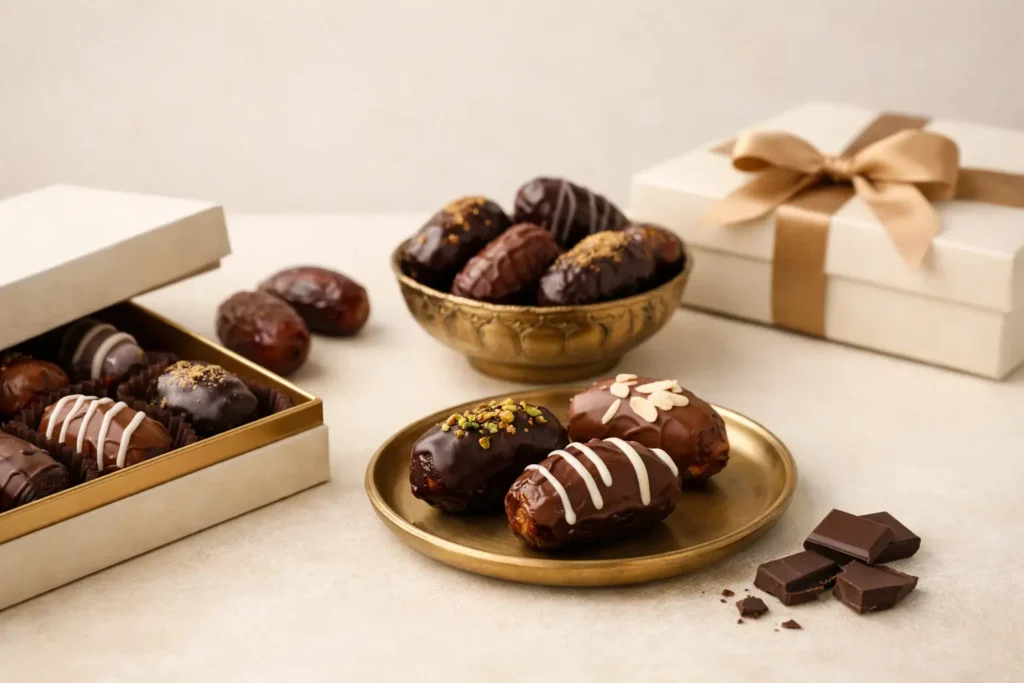
A box can look polished and still disappoint at the first bite. Knowing how to choose chocolate dates comes down to five details: the date itself, the filling, the chocolate, the finish, and how the box will be served or gifted.
Chocolate-covered dates are not simply confectionery with fruit inside. A good one balances the soft, caramel-like richness of the date with a roasted nut and chocolate that adds character without hiding either ingredient.
What should you look for in a chocolate date?
Look for a clearly identified date variety, a defined filling, and chocolate with a stated cocoa percentage or origin. These details tell you more than a broad description such as “premium” or “assorted.”
Medjool dates are a strong choice when you want a substantial, soft fruit with natural sweetness and a generous bite. They should be pitted cleanly and remain intact, rather than flattened or overly sticky. The fruit should feel tender, not dry or grainy.
The filling should have a purpose. A single roasted nut gives the date structure and a clean contrast to its softness. It also makes the flavor easier to read: you can taste the fruit, then the nut, then the chocolate. Fillings with multiple flavors can be enjoyable, but they are less predictable when buying for a group with different preferences.
Chocolate should be more than a coating that adds sweetness. Its cocoa percentage, milk content, and origin affect how the final piece tastes. When those details are absent, it is harder to judge whether the chocolate will complement the date or overwhelm it.
Should you choose dark or milk chocolate dates?
Choose dark chocolate dates when the recipient prefers a less sweet finish and deeper cocoa flavor. Choose milk chocolate dates when you want a softer, creamier profile that is familiar and easy to serve after a meal.
A 70% dark chocolate brings bitterness, fruit notes, and a firmer snap. It is particularly well suited to a sweet Medjool date because the cocoa creates contrast. This is usually the better choice for someone who enjoys dark chocolate bars, espresso, or desserts that are not heavily sweetened.
A 38% milk chocolate has more dairy richness and a rounder finish. It can make the roast of the nut feel warmer and the date taste more like caramel. For office gifts, family tables, or guests with mixed preferences, milk chocolate is often the lower-risk option.
Neither is automatically better. The decision depends on the recipient and the setting. If you are sending one box to a dark-chocolate enthusiast, do not choose milk simply because it is more broadly familiar. If the box will be passed around after dinner, a mix of dark and milk can make the gesture more inclusive.
Why does the nut filling matter?
The nut determines much of the texture and aroma in a chocolate date. It should be roasted, whole or neatly formed, and proportioned to the fruit rather than lost inside it.
Almonds are crisp and lightly sweet. They suit both milk and dark chocolate and give a classic, composed bite. Hazelnuts offer a fuller roast and a more confectionery-like character, particularly with milk chocolate. Pistachios bring a greener, more savory note that can lift the sweetness of the date. Cashews are gentler and creamier, with less crunch.
There is also a practical consideration. A single-nut filling is easy to describe when gifting and easy for guests to understand when serving. If you know a recipient has a nut allergy, choose a different gift rather than assuming a chocolate date is suitable. Ingredient and allergen information should always guide the final decision.
How can you judge chocolate date quality before buying?
Use the product description to assess the construction of each piece. Good descriptions name the fruit, filling, and chocolate rather than relying on decorative language.
Check for these five signals:
- The date variety is specified, such as Medjool.
- The date is pitted, so it is ready to eat.
- The filling is identified, ideally with the nut named.
- The chocolate type is clear, including dark or milk and cocoa percentage where available.
- The product explains whether the dates are handmade and how they are finished.
Presentation matters, but it should support the product rather than compensate for missing information. A thoughtful box is valuable for gifting because it arrives ready to place on a desk, take to dinner, or send to a host. Still, a clean ingredient story is the more reliable sign of a considered product.
Tâmara, for example, makes handmade chocolate-coated Medjool dates with one roasted nut in each pitted date, finished in single-origin 70% dark or 38% milk chocolate. That level of specificity helps a buyer choose by taste instead of by packaging alone.
How many chocolate dates should you buy?
Buy according to the occasion, not only the number of people. A small box can be right for a personal thank-you, while a larger selection works better for a shared table or professional gift.
For one recipient, consider whether the box feels like a tasting experience or a staple to keep at home. A concise assortment can feel more intentional than an oversized quantity, especially when each date is substantial. For a host gift, think about how many people may sample it after dinner. One piece per guest is often too little, while several options per person make it easier to compare dark and milk chocolate.
For workplace gifting, consistency is often more useful than variety. Choose a format that is easy to share, keeps the pieces presentable, and does not require cutting or plating. If the group is unfamiliar with chocolate dates, include both chocolate styles where possible. It gives people a straightforward way to find their preference.
What makes chocolate dates a good gift?
Chocolate dates work well as gifts because they combine a regional fruit with a familiar format. They feel more considered than a standard box of chocolates while remaining easy to enjoy without preparation.
They also fit several moments without needing a different product for each one. A polished box can suit a house visit, Eid gathering, client thank-you, or a quiet gesture for someone who appreciates specialty food. The best choice matches the recipient’s taste first and the occasion second.
Avoid selecting only by visual impact. A gold finish, bold color, or large box can look impressive, but the recipient will remember the balance of the bite. Fruit quality and chocolate choice are what make the gift feel generous after the lid is opened.
How should you store chocolate dates?
Store chocolate dates according to the product label, and keep them away from heat, humidity, and strong odors. Chocolate can lose its finish when conditions change quickly, while dates can become firmer or stickier when poorly stored.
If you are buying ahead for a specific occasion, check the best-before information before ordering. Do not assume that every box has the same storage life, particularly with handmade products. For serving, let the dates sit in their box until close to the moment guests arrive, then present them at a comfortable room temperature if the product instructions allow it.
A chocolate date should feel complete in one bite: soft fruit, roasted nut, and chocolate with a clear point of view. Choose that balance well, and the box needs very little explanation.
