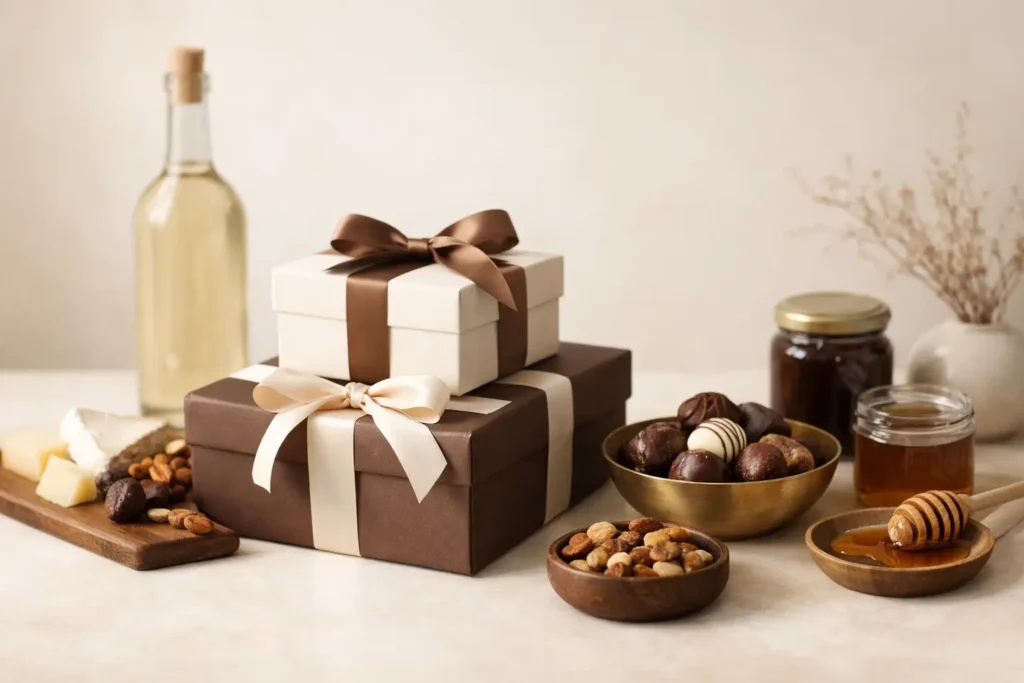
A gourmet gift is remembered when it feels chosen for one person, not selected from a category. Knowing how to choose gourmet gifts starts with the recipient’s taste, the moment you are marking, and a product with a clear point of view.
A beautifully made food gift does not need a grand occasion. It can thank a host after dinner, recognize a colleague’s work, welcome someone into a new home, or bring a thoughtful detail to Eid, Ramadan, a birthday, or a family visit. The best choice is specific enough to feel personal and practical enough to be enjoyed.
How to choose gourmet gifts for the occasion
Start with the setting. A gift for a close friend can be more expressive than one for a client or a host you have only just met. The right level of familiarity determines the flavor profile, format, and presentation.
For a dinner invitation, choose something that can be served or shared after the meal. A compact box of premium sweets is usually easier for the host than a large item that needs preparation, refrigeration, or extra table space. It should complement the evening rather than become another task.
For professional gifting, favor restraint and consistency. The gift should look considered without relying on a novelty message or an overly personal flavor. Chocolate, dates, nuts, coffee, tea, and well-made pantry goods work well because they are familiar, easy to share, and suitable for a range of recipients.
For celebrations, a more distinctive item is appropriate. This is where origin, craftsmanship, and an unexpected pairing have real value. A handmade chocolate-coated Medjool date, for example, offers a clear story in one piece: a pitted date, one roasted nut, and single-origin chocolate. That level of detail makes the gift feel deliberate without requiring an explanation from the giver.
Timing matters as much as the event. If the gift will be carried to an office, a restaurant, or a family gathering, choose a format that travels neatly. If it is being sent directly, presentation becomes part of the experience because it is the recipient’s first impression.
What does the recipient actually enjoy?
Choose for the recipient’s habits, not your own definition of luxury. A person who prefers dark chocolate may value a 70% cocoa coating more than an elaborate assortment. Someone who enjoys traditional ingredients may appreciate a modern presentation of dates and roasted nuts more than an unfamiliar confection.
Think in terms of four useful signals: flavor preference, sharing habits, food restrictions, and lifestyle. You do not need a full profile. One or two reliable details are enough to make the choice feel personal.
A gift for a household should be easy to divide. A gift for one person can be more focused, such as a small selection built around their preferred chocolate or nut. For a team, avoid formats that require cutting, plating, or keeping track of individual preferences unless you know the group well.
There is also a difference between familiar and predictable. Familiar ingredients can still feel special when the quality is visible. Medjool dates, roasted nuts, and chocolate are recognizable. Their sourcing, proportions, finish, and packaging are what turn them into a gourmet gift.
What makes a food gift feel genuinely gourmet?
A gourmet gift should be precise about what it is. Look for defined ingredients, a clear method, and a product that does not hide behind broad claims such as “premium” or “luxury.”
Ingredient quality is the first test. Ask what kind of chocolate is used, whether the nuts are roasted, whether the fruit has a recognizable variety, and whether the product is made by hand or produced at scale. Specific answers build confidence because they give the recipient something real to enjoy and discuss.
Balance matters next. The most memorable food gifts do not simply add more sweetness, richness, or decoration. They create contrast. A soft Medjool date, a single roasted nut, and dark chocolate provide sweetness, texture, and bitterness in measured proportions. Milk chocolate offers a rounder, creamier result. Neither is universally better. The choice depends on the recipient.
Consider shelf life and handling, too. Freshness is part of quality, but a gift should also suit the recipient’s schedule. A host may enjoy something ready to serve. A busy professional may prefer an elegant box they can keep at their desk or take home. If you are unsure, choose a product designed to hold its character beyond the first day.
Presentation should support the product rather than compensate for it. A refined box, clean labeling, and a considered color palette signal care. Excessive wrapping, oversized packaging, or vague storytelling can make a modest product feel less convincing, not more.
How should you handle dietary needs and preferences?
Treat dietary needs as a core part of the selection, not a final check. When you know a recipient avoids a particular ingredient, select a gift with clear ingredient information rather than hoping a mixed assortment will work.
Nuts, dairy, gluten, alcohol, and added sugar are common considerations, but the right question depends on the recipient. Do not assume that a date-based gift suits every diet or that dark chocolate is dairy-free without checking the product details. If the gift is for an office or group, a broadly suitable option is often the more thoughtful choice.
When you do not know the recipient’s preferences, avoid making the gift overly niche. A smaller, well-made selection with familiar ingredients is usually more useful than a large assortment built around a polarizing flavor. This is especially true for client gifting, where generosity should never create pressure to consume something unwanted.
How much should you spend on a gourmet gift?
Set the budget according to the relationship and the occasion, then spend it on quality rather than quantity. A concise gift with excellent ingredients often feels more generous than a large box of ordinary items.
For a casual host visit, choose a gift that adds a polished touch without making the exchange feel formal. For a close friend or family celebration, you can select something more distinctive or add a personal note. For business gifting, consistency matters if you are buying for several people. It is better to choose one clear standard and apply it thoughtfully than to create noticeable differences between recipients.
Price should be easy to understand from the product itself. Origin, craftsmanship, ingredient quality, and presentation all justify value when they are clearly stated. Size alone does not. A gift becomes more meaningful when the recipient can see why it was chosen.
Should you choose a classic or an unexpected flavor?
Choose a classic flavor when you have limited information. Choose an unexpected flavor when you know the recipient enjoys trying new things. This simple rule prevents most gifting mistakes.
Classic choices work well for new colleagues, clients, larger groups, and formal occasions. Dark or milk chocolate, dates, nuts, coffee, tea, and restrained fruit notes have broad appeal. They also feel appropriate across many cultural settings in the UAE and the GCC.
Unexpected choices are best for people whose preferences you know well. A distinctive origin, a specific cocoa percentage, or a carefully balanced texture can show real attention. The point is not to surprise for its own sake. It is to choose something they would be pleased to discover.
If you are deciding between two options, select the one with the clearer story. A recipient is more likely to remember a gift when they can describe it in one sentence: what it is, where its character comes from, and why it tastes different.
What should the final presentation include?
A gourmet gift needs only three things at the finish: a well-kept product, suitable packaging, and a short note when the relationship calls for one. The note should be direct. Mention the occasion, offer thanks or congratulations, and leave the product to speak for itself.
Avoid turning the card into a sales message or a long explanation of your choice. “Thank you for hosting us” is enough. “Wishing you a joyful Eid” is enough. The gesture feels more confident when it is not overworked.
Before giving or sending the gift, check the recipient name, the occasion date, and whether the format suits the setting. That final minute of care often matters more than an additional item in the box.
The most successful gourmet gifts are not the loudest ones. They are the ones that fit naturally into a person’s day, offer a small moment of pleasure, and make the recipient feel accurately seen.
