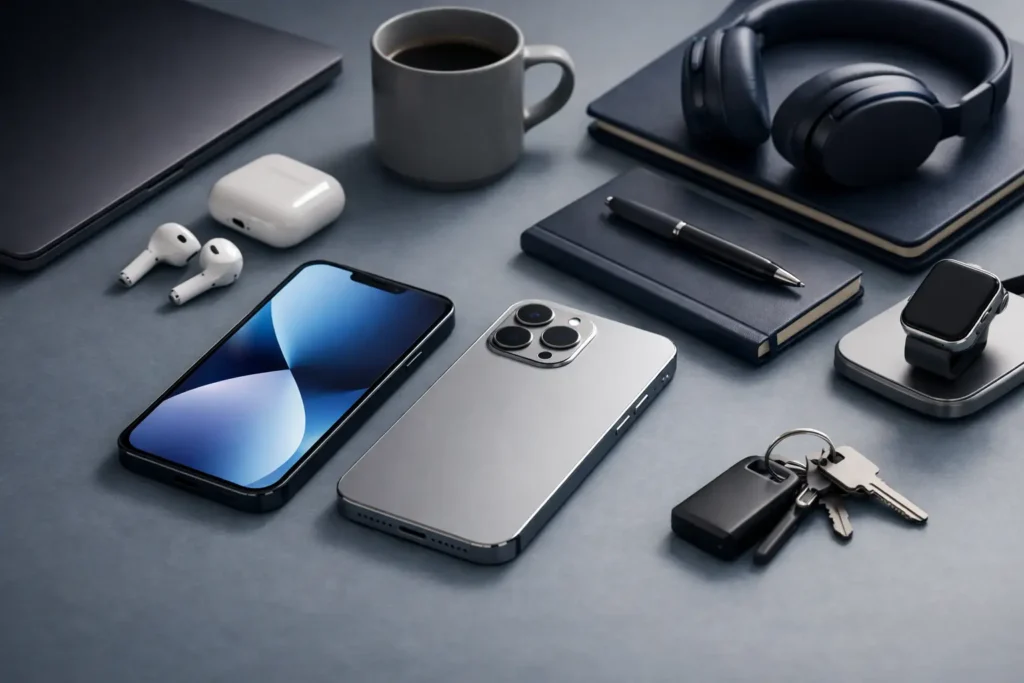
The iPhone 16 is not a dramatic reinvention of the smartphone. Its appeal is more practical: a faster foundation, a more flexible camera system, USB-C charging, and controls that make everyday tasks feel more deliberate. For buyers replacing a phone that is several years old, those details can add up quickly.
It is also no longer Apple’s newest phone, and that changes the question in a useful way. With the iPhone 17 range now above it, the iPhone 16 has settled into the role of the considered choice: proven hardware, mature software, and prices that generally sit below their launch levels. The harder question is not whether the iPhone 16 is capable. It is which version suits the way you actually use a phone: between meetings, on a flight, at dinner with friends, or while documenting a weekend away.
The iPhone 16 range, clearly defined
The range separates into two distinct experiences. The iPhone 16 and iPhone 16 Plus are the straightforward choices, built around a bright OLED display, a 48-megapixel main camera, the Action button, and Camera Control. The iPhone 16 Pro and iPhone 16 Pro Max add more advanced displays, a longer telephoto reach, and expanded video tools.
That distinction matters more than a long specification sheet. The standard models are already fast enough for demanding daily use, including photography, navigation, streaming, messaging, and mobile work. The Pro models make sense when the display, camera reach, or video capability is part of your regular routine rather than an occasional convenience.
iPhone 16 and iPhone 16 Plus
The iPhone 16 has a 6.1-inch display, a size that remains comfortable for one-handed use and easy to carry. The iPhone 16 Plus moves to 6.7 inches, giving you more room for reading, maps, documents, and entertainment. Its larger body also allows for longer battery life.
Both models share the same core features. The 48-megapixel Fusion camera produces detailed everyday photos and offers a useful 2x crop option without requiring a separate telephoto lens. The updated ultra-wide camera supports macro photography, which is valuable for close details such as food, textures, documents, or small product shots.
The choice between them is mostly physical. Pick the standard iPhone 16 if ease of handling matters most. Choose the Plus if you spend long stretches away from a charger, read often on your phone, or simply prefer a more spacious screen. A larger phone is not automatically better if it feels cumbersome in your hand or pocket.
iPhone 16 Pro and iPhone 16 Pro Max
The Pro models are designed around more specialized use. Their displays have a smoother 120Hz refresh rate, which makes scrolling, animation, and fast-moving content feel more fluid. They also support an always-on display, so key information can remain visible without fully waking the phone.
The camera difference is meaningful for people who shoot often. Both Pro models include a 5x telephoto camera, allowing you to frame distant architecture, stage moments, travel scenes, and portraits with more flexibility. The ultra-wide camera is also upgraded to 48 megapixels, improving detail in wider compositions and close-up work.
Video is another reason to consider Pro. Features such as 4K recording at up to 120 frames per second give editors and creators more room to shape motion after filming. For casual clips, family videos, and social posts, the standard iPhone 16 remains more than sufficient. The Pro premium is easiest to justify when you will use these controls repeatedly.
Choosing an iPhone 16 screen size
Screen size affects almost every interaction. The compact iPhone 16 is the most discreet option. It is well suited to commuters, frequent travelers, and anyone who wants a phone that stays out of the way until it is needed.
The iPhone 16 Plus and iPhone 16 Pro Max offer a larger canvas for spreadsheets, photo editing, subtitles, and long-form reading. They are also easier to use when sharing a screen with another person. The trade-off is weight and reach. A larger display is pleasant on a desk, in a café, or during a flight, but it can become less convenient during a busy day.
The iPhone 16 Pro sits between those extremes with a 6.3-inch display. It offers a little more room than the standard model without approaching the scale of the Pro Max. For many buyers, it is the balanced choice: premium display technology and advanced cameras in a size that remains manageable.
Camera Control changes the shooting rhythm
Camera Control is a small physical interface built into the side of the iPhone 16 range. A press launches the camera, while lighter gestures can adjust settings such as zoom or exposure. It is not essential, but it can make spontaneous photography more natural because the camera is ready before the moment has passed.
Its value depends on how you take photos. If you usually compose carefully and edit afterward, the touchscreen controls remain familiar and effective. If you photograph street scenes, meals, events, or travel details as they happen, the dedicated control can reduce friction.
The standard iPhone 16 is especially strong for daily photography. Its main camera handles portraits, interiors, and evening scenes well, while the ultra-wide lens opens up group shots and landscape views. The Pro models provide more options, not necessarily better results in every situation. A telephoto lens is useful when distance is part of the composition; it does not replace good light, framing, or timing.
Battery, charging, and storage deserve more attention
Battery life is easy to overlook in a showroom and impossible to ignore on a long day. The iPhone 16 Plus and iPhone 16 Pro Max are the natural choices for people who depend on their phone from morning through late evening. Their larger batteries are particularly useful for travel, navigation, photography, and extended video playback.
All iPhone 16 models use USB-C. That can simplify a travel kit if your laptop, tablet, headphones, or other devices already use the same connector. Magnetic wireless charging remains useful at a desk or bedside, and a slim magnetic power bank can extend that convenience away from home. If you fly often, it is worth knowing the UAE’s cabin rules for power banks before building a travel kit around one.
Storage should be chosen with restraint and realism. A lower-capacity model is often enough for people who stream media, use cloud photo libraries, and clear out old downloads. More storage is worth considering if you keep extensive photo archives locally, record high-resolution video, download large work files, or prefer not to manage space regularly. The right capacity is the one that leaves room for the next two years, not just the first month.
Software features should be considered carefully
The iPhone 16 is built for Apple Intelligence features, including writing assistance, image tools, and more context-aware system functions. These features can be useful, but they should not be the only reason to choose a phone. Availability can vary by language, region, and software release, and the most useful tools are often the quieter ones that save a few steps in a normal day.
Focus instead on the complete experience: the quality of the display you look at every day, the camera you will reach for, the battery that supports your schedule, and the storage that fits your habits. Software capabilities will continue to evolve after purchase.
Which iPhone 16 fits your routine?
The iPhone 16 is the sensible choice for most people who want a current-feeling, compact phone with an excellent main camera and modern everyday features. The iPhone 16 Plus is for those who want that same approach with a bigger screen and more battery endurance.
Choose the iPhone 16 Pro if a smoother display, 5x telephoto camera, and more serious video tools will be used often. The iPhone 16 Pro Max extends that experience with the largest display and strongest battery potential in the range. It is compelling, but its size should be tested against your daily habits rather than chosen on specifications alone.
Whichever model you settle on, apply the same checks that matter for any handset: the regional version, the storage tier, what is included in the box, and who is selling the device. Our guide to buying a smartphone online in the UAE walks through each of them.
A phone is one of the few objects that follows every part of your day. Choose the iPhone 16 model that feels considered in your hand, useful in your work, and ready when the moment is worth keeping.
