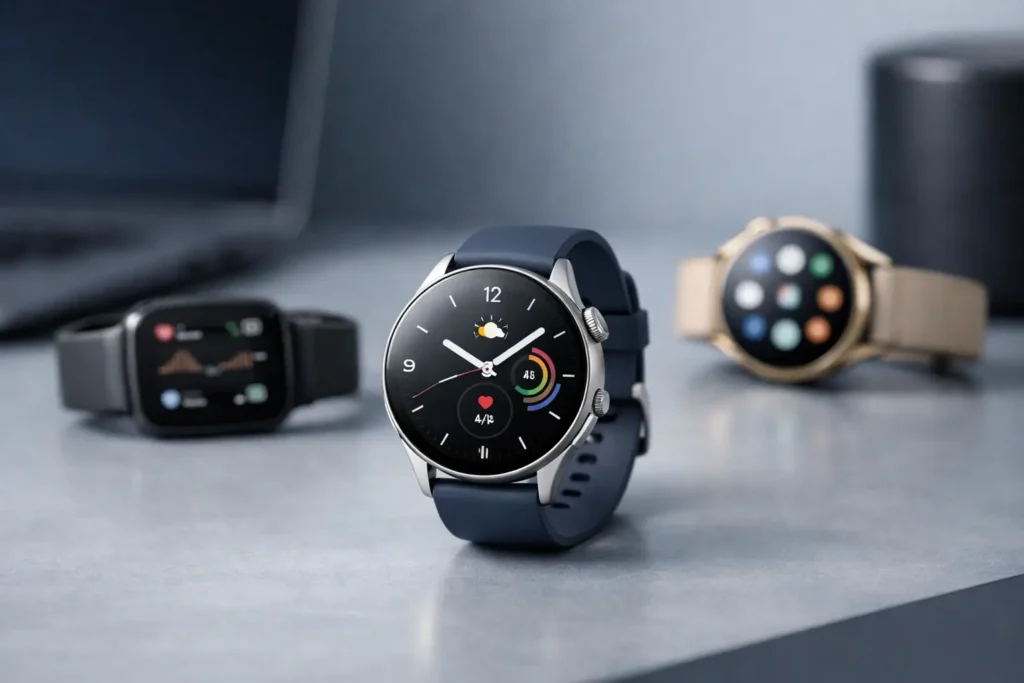
The best smartwatch for everyday use is the one that fits your phone, feels unobtrusive from morning to night, and needs less attention than it saves. For most buyers, that means choosing a platform first, then deciding how much fitness tracking, battery life, and design matter to their routine.
A smartwatch is not only a small screen for notifications. It can replace quick checks of your phone, track walks and workouts, show boarding passes, manage music, and provide a quiet nudge before the next meeting. The better choice is rarely the model with the longest feature list. It is the one you will still want to wear on an ordinary Wednesday.
What makes a smartwatch good for everyday use?
Everyday use depends on comfort, compatibility, charging habits, and notification control. Health features matter, but only when they work in a way you will actually use.
Start with the watch on your wrist. A large case can look impressive in product photos, yet feel awkward under a shirt cuff or while sleeping. Smaller wrists often suit a 40 mm to 42 mm case, while 44 mm to 46 mm models offer more room for maps, messages, and workout data. The right size is personal, but weight is usually more noticeable than dimensions after a full day.
The band matters just as much. Silicone is practical for workouts and humid weather. Nylon is light and comfortable for sleep tracking. Leather and metal look more formal, but they can feel less forgiving during exercise or in high heat. A watch with easy band changes gives you more flexibility than a watch with one expensive, all-purpose strap.
Notification handling is another dividing line. The ideal smartwatch shows the messages that need a response and keeps everything else quiet. Look for controls that let you filter apps, mute groups, and use haptic alerts rather than constant sounds. If your wrist buzzes for every promotion, delivery update, and social reaction, the watch quickly becomes a distraction.
Which smartwatch works with your phone?
Phone compatibility is the first non-negotiable decision. An excellent watch with the wrong operating system will be limited, inconvenient, or unusable.
For iPhone users
Apple Watch is the natural choice for iPhone owners who want close integration with calls, messages, Apple Pay, maps, and iPhone notifications. Its strength is convenience. It is particularly effective for people who want to leave their phone in a pocket, bag, or charging room without missing essential updates.
The trade-off is battery life. Most Apple Watch models are designed around daily charging, and an iPhone is required for setup and ongoing use. Buyers who prefer several days between charges may value a different category of watch more than the deepest app integration.
For Android users
Samsung Galaxy Watch models are a strong fit for Android users, especially those already using a Samsung phone. They combine smartwatch functions, health tracking, messaging, and a polished circular-watch design. Some features can work best within the Samsung ecosystem, so it is worth checking the details before choosing a model.
Google Pixel Watch is a compelling option for people who prefer Google services and Fitbit-style health insights. Its clean software experience suits users who rely on Google Maps, Google Calendar, and Gmail throughout the day. As with Apple Watch, frequent charging is part of the ownership routine.
For buyers who want longer battery life
Garmin watches suit people who prioritize training data, outdoor activity, and less frequent charging. Many models can last several days or considerably longer, depending on display settings and GPS use. They tend to be more functional than fashion-led, although the range includes refined designs for work and weekend wear.
Amazfit and similar value-focused brands can also make sense when the priority is long battery life and core tracking at a lower cost. Check app quality, phone compatibility, contactless payment availability, and the accuracy of the features you expect to use before treating them as a direct substitute for a major smartwatch platform.
How much battery life do you need?
One day of battery life is enough if charging is already part of your evening routine. Several days are better if you travel often, sleep in your watch, or dislike another device on the nightstand.
Daily charging is not automatically a weakness. A watch that charges while you shower or prepare for bed may never cause a problem. It becomes a problem when a short trip, a late evening, or a busy workweek leaves you without sleep tracking, payments, or notifications when you want them.
Always-on displays, GPS workouts, cellular connectivity, and frequent notifications use more power. Manufacturer estimates are useful starting points, but they are not a promise for every user. Consider your real pattern: how many workouts you do, whether you sleep with the watch on, and whether you regularly take calls from your wrist.
Do you need health and fitness tracking?
Most people benefit from basic activity, heart rate, sleep, and workout tracking. Advanced health features are valuable only if you understand their purpose and are comfortable using the information thoughtfully.
Step counts and movement reminders can make a watch more useful during a desk-heavy week. Sleep tracking may reveal patterns around bedtime consistency, recovery, or late caffeine. Workout detection is convenient for walks, runs, cycling, and gym sessions, although manual tracking is usually more reliable when you care about precise records.
Do not buy a watch solely for a single health metric. Wrist-based readings can be useful indicators, but they are not a replacement for professional medical advice or diagnostic equipment. The practical question is simpler: will this data help you adjust a habit, training plan, or daily schedule?
For runners, cyclists, and hikers, GPS performance, training metrics, physical buttons, and battery life often matter more than replying to messages. For office-based users, calendar alerts, contactless payments, sleep tracking, and an understated case may matter more than advanced sports modes.
Should you choose GPS, cellular, or Bluetooth?
Bluetooth-only models are enough for many people. They connect to your phone nearby and usually cost less than cellular versions.
GPS is useful for recording outdoor routes without carrying your phone. Cellular adds the ability to make calls, receive messages, stream music, or use maps when your phone is not with you. It is most useful for runners, parents, and people who regularly leave the house without a phone.
Cellular also adds cost and may require a compatible carrier plan. Confirm local carrier support before making it a deciding feature. For UAE buyers, this check is especially worthwhile because supported watch plans and activation requirements can vary by network.
What should you spend?
A sensible everyday smartwatch budget starts with the features you will use weekly, not the most advanced model in the lineup. The price difference between generations is often better spent on a second band, a protective case if you need one, or a charging setup that fits your routine.
Entry-level watches can handle notifications, activity tracking, alarms, and basic workouts well. Midrange models often add better materials, brighter displays, improved sensors, and more complete software support. Premium versions may offer tougher cases, larger batteries, specialized outdoor tools, or cellular connectivity.
Choose the premium model when its specific advantage changes how you use it. A sapphire crystal, titanium case, deep sport metrics, or multi-day battery life can be worthwhile for the right person. If your watch mostly checks messages, records walks, and helps you stay on time, the standard version is often the better everyday purchase.
The best smartwatch for everyday use is usually the least complicated one
The best smartwatch for everyday use should make small moments easier without asking for constant management. Pick the platform that belongs with your phone, choose a case and band you can wear comfortably for 12 hours, and be honest about charging.
Try to picture the watch in the less glamorous parts of life: answering a quick call while carrying coffee, checking a meeting alert between appointments, tracking an evening walk, and charging before bed. That is where a good smartwatch earns its place on your wrist.
