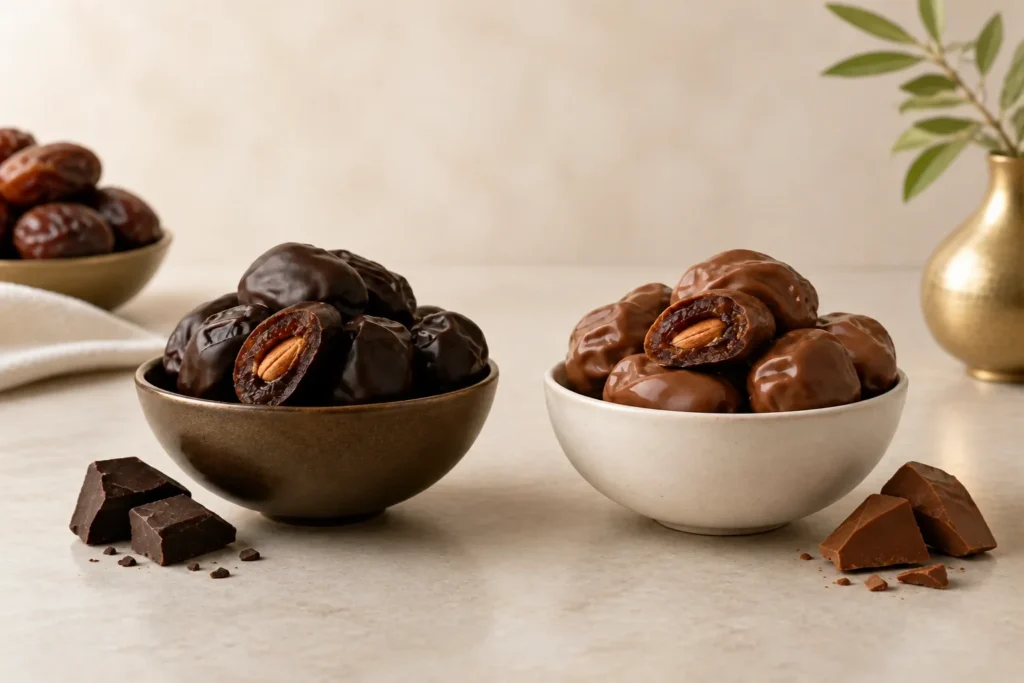
A chocolate-covered date is already a layered bite: soft Medjool fruit, a roasted nut, and a crisp chocolate shell. In dark versus milk chocolate dates, the better choice comes down to the balance you want between the date’s caramel-like sweetness and the chocolate’s cocoa character.
This guide focuses on serving and gifting. Our earlier piece on dark vs milk chocolate for dates covers the tasting basics in more detail.
Dark chocolate makes the fruit and nut feel more defined. Milk chocolate makes the same combination rounder, creamier, and more immediately sweet. Neither is automatically more refined. The right choice depends on the recipient, the occasion, and what is being served alongside it.
Dark versus milk chocolate dates: what changes?
The chocolate changes the finish more than the date itself. Dark chocolate usually leaves a firmer cocoa note after the first bite, while milk chocolate moves toward dairy richness and a softer, sweeter finish.
A Medjool date has its own depth. Its sweetness can suggest caramel, toffee, or brown sugar, even without added flavoring. A roasted nut adds dryness and texture. Chocolate determines whether those elements feel contrasted or blended together.
With dark chocolate, the fruit sweetness is set against cocoa bitterness. The result can feel measured and less sugary, especially after coffee or at the end of a substantial meal. With milk chocolate, the date and chocolate meet in a more unified sweetness. The nut often reads as warm and praline-like.
Chocolate percentage is useful, but it is not a complete tasting note. A 70% dark chocolate generally brings more cocoa intensity than a milk chocolate. The final flavor still depends on the cocoa’s origin, roast, sweetness level, and the proportion of chocolate around the date.
Should you choose dark or milk chocolate dates?
Choose dark chocolate dates when the recipient enjoys defined cocoa flavor and a less sweet finish. Choose milk chocolate dates when you want a familiar, creamy profile that most guests will recognize immediately.
This is often a question of context rather than preference alone. A box for a mixed office group may benefit from both styles. A smaller personal gift can be more specific: dark for the person who orders an espresso without sugar, milk for the person who reaches for a classic chocolate dessert.
Choose dark chocolate dates for cocoa contrast
Dark chocolate dates are a strong choice when the date itself should remain prominent. The chocolate does not disappear, but its bitterness can make the fruit taste clearer and the roasted nut taste more savory.
They work particularly well after dinner, alongside black coffee, or with unsweetened tea. They also suit a recipient who prefers chocolate with a lingering finish rather than a creamy center-of-the-palate sweetness.
At Tâmara, the dark option is made with 70% single-origin Belgian chocolate from a São Tomé estate around a pitted Medjool date filled with one roasted nut. That construction matters. There is no pit to interrupt the bite, and the single nut gives the fruit a structured center rather than a loose filling.
Choose milk chocolate dates for a softer finish
Milk chocolate dates are usually the easier introduction to chocolate-enrobed dates. The milk chocolate’s creaminess softens the date’s natural intensity and gives the bite a more confection-like profile.
A milk chocolate coating can be especially suitable for daytime serving, family gifting, and occasions where tastes vary. It is also a practical choice when dates are being offered with lighter tea, where a very dark cocoa profile may feel more forceful than intended.
Milk chocolate does not mean the date is hidden. The best versions still allow the fruit’s chew and the nut’s roasted flavor to come through. The difference is that the elements arrive together rather than in contrast.
How does sweetness affect the choice?
Milk chocolate dates usually taste sweeter, but sweetness is not only about sugar. Texture, cocoa bitterness, and dairy notes all affect how sweet a bite feels.
A date is naturally sweet and dense. Adding milk chocolate can make that richness feel generous and rounded, which is exactly the point for some occasions. Adding dark chocolate creates a counterweight. The date may still be sweet, but the finish feels drier and more cocoa-forward.
This distinction is useful when choosing a gift. If the recipient enjoys desserts such as milk chocolate truffles, caramel pastries, or creamy ice cream, milk chocolate dates are likely to feel intuitive. If they prefer dark chocolate bars, roasted coffee, or less sugary desserts, dark chocolate dates are often the better fit.
Serving temperature also changes perceived sweetness. Chocolate that is too cold can seem muted and waxy. Letting dates sit briefly at room temperature helps the coating soften slightly and allows the chocolate, fruit, and nut to register separately.
Does single-origin chocolate make a difference?
Single-origin chocolate can give a date a more distinct cocoa identity. It does not guarantee one universal flavor, but it gives the chocolate a clearer point of origin than a blend designed for uniformity.
Cocoa from different growing regions can lean toward fruit, nuts, spice, earthiness, or deeper roasted notes. Those details may be subtle once the chocolate is paired with a Medjool date and nut, yet they still influence the finish. In dark chocolate, origin character is usually easier to notice because there is less dairy flavor around it.
For gift buyers, this is less about technical tasting language and more about intention. A single-origin coating signals that the chocolate is part of the product’s design, not simply a sweet outer layer.
What should you pair with chocolate-covered dates?
Dark chocolate dates pair best with drinks that can meet their cocoa intensity. Milk chocolate dates pair well with softer, creamier, or more aromatic drinks.
For dark chocolate, black coffee, espresso, Arabic coffee, and unsweetened black tea are dependable choices. The roast notes in the beverage can echo the chocolate and nut without making the date seem overly sweet. If serving several sweets, use dark dates as the more restrained option on the plate.
For milk chocolate, cappuccino, latte, chai, and gently brewed tea can work well. The goal is not to add sweetness at every step. A lightly spiced drink, for example, can give the chocolate and date a little contrast while preserving their creaminess.
If dates are part of a gift box or table setting, use restraint. One or two pieces beside coffee is often more memorable than a crowded dessert arrangement. Their compact size and layered texture already make them feel considered.
Are dark chocolate dates better for gifting?
Dark chocolate dates can feel more tailored for a recipient with established chocolate preferences. Milk chocolate dates are often the safer choice when you do not know what someone enjoys.
For professional gifting, a mixed selection is usually the most thoughtful answer. It allows guests to choose according to their taste without turning the gift into a guessing game. It also gives the presentation visual variation, since dark and milk coatings naturally create contrast in the box.
For host gifts, consider the meal. Dark chocolate dates fit a dinner where coffee will be served afterward. Milk chocolate dates suit afternoon visits, family occasions, and settings where the gift may be shared by children and adults. For a close friend or client whose preferences you know, choosing one chocolate style can feel more personal.
The presentation should be simple and kept in good condition. Chocolate is sensitive to heat, and dates are at their best when the coating is clean, intact, and allowed to come to a comfortable serving temperature.
What makes a chocolate date feel balanced?
A balanced chocolate date lets you taste three things in sequence: chocolate, fruit, and nut. If one element overwhelms the others, the bite can feel either too sweet, too dry, or too heavy.
The date should be soft without feeling loose. The nut should add a clear roasted note and a little structure. The chocolate should break cleanly, then melt without masking the fruit. Dark chocolate tends to emphasize separation between the layers. Milk chocolate tends to make them feel integrated.
That is why the dark versus milk chocolate dates question has no universal winner. Choose 70% dark when you want cocoa contrast and a measured finish. Choose milk chocolate when you want creaminess and immediate familiarity. For a gift meant to suit more than one palate, offering both is the most considered choice.
